
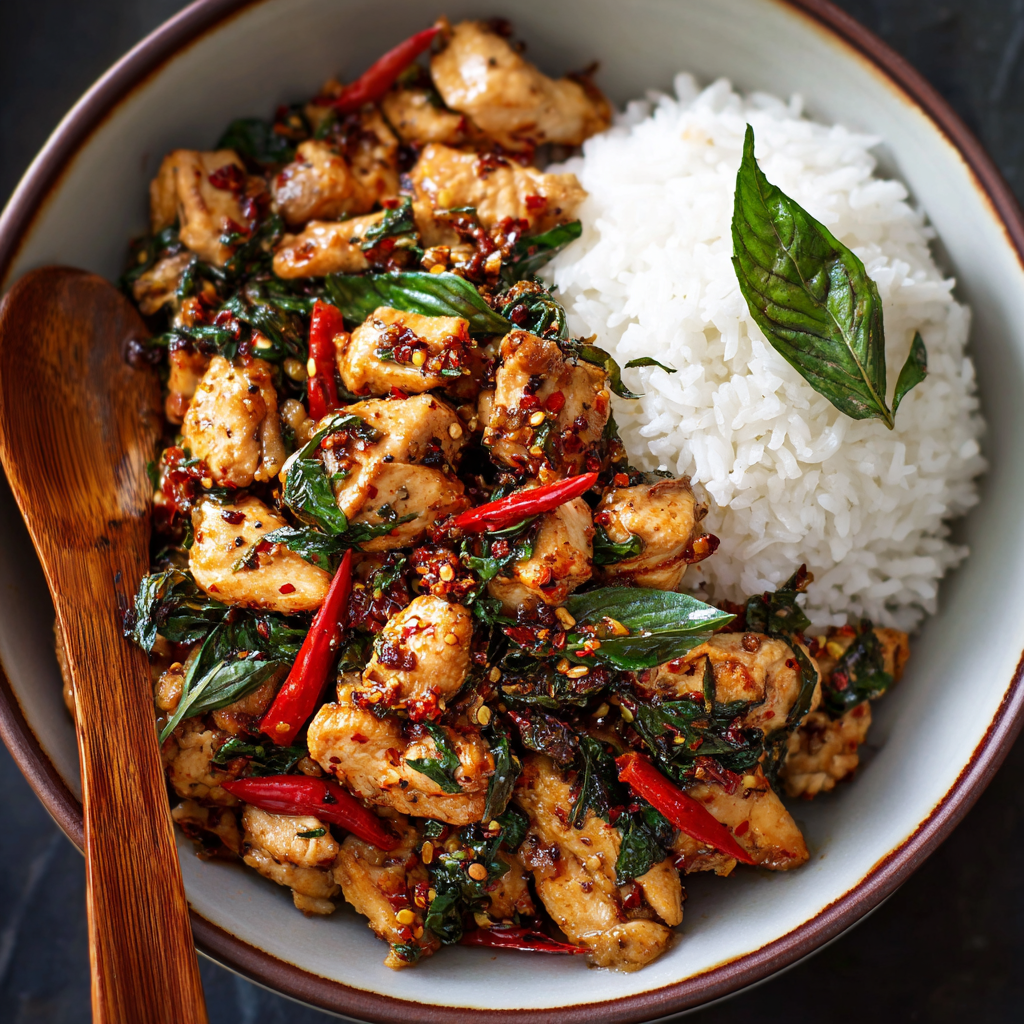

Spicy Thai Basil Chicken is an aromatic dish that perfectly balances bold flavors with simple preparation. This beloved Thai street food, known as Pad Krapow Gai, combines tender chicken with fresh holy basil, creating an explosion of savory, spicy, and slightly sweet flavors. Originating from Thailand’s vibrant street food culture, this dish has become a staple in Thai restaurants worldwide. The recipe showcases the essence of Thai cooking with its use of fish sauce, chilies, and aromatic basil that creates an unforgettable taste experience.
Thai basil, distinct from sweet basil, provides a unique anise-like flavor that defines this dish. The combination of high-heat cooking and fresh ingredients results in a meal that’s both quick to prepare and deeply satisfying. Whether you’re craving authentic Thai flavors or looking to expand your cooking repertoire, this recipe delivers restaurant-quality results in your own kitchen. The dish is traditionally served over jasmine rice with a fried egg on top, making it a complete and hearty meal.
Ingredients for Spicy Thai Basil Chicken
- 1 pound chicken breast or thigh, minced or finely chopped
- 2 tablespoons vegetable oil
- 4 garlic cloves, minced
- 3-4 Thai bird’s eye chilies, chopped (adjust to taste)
- 1 red bell pepper, sliced
- 1 small onion, sliced
- 2 tablespoons fish sauce
- 1 tablespoon oyster sauce
- 1 tablespoon soy sauce
- 1 teaspoon sugar
- 1/4 cup chicken broth
- 1 cup fresh Thai basil leaves
- 2 cups cooked jasmine rice for serving
- Fried eggs (optional, for topping)
Instructions for Making Spicy Thai Basil Chicken
- Heat the vegetable oil in a large wok or skillet over high heat until it begins to smoke slightly.
- Add the minced garlic and chopped chilies, stirring quickly for about 20 seconds until fragrant.
- Add the chicken to the wok, breaking it up and stirring constantly for 3-4 minutes until cooked through.
- Toss in the sliced bell pepper and onion, cooking for another 2 minutes until slightly softened.
- Pour in the fish sauce, oyster sauce, soy sauce, and sugar, stirring well to combine.
- Add the chicken broth and let the mixture simmer for 1-2 minutes until the sauce reduces slightly.
- Remove the wok from heat and immediately stir in the fresh Thai basil leaves until they wilt.
- Serve the chicken over jasmine rice, topped with a fried egg if desired.
Nutritional Information
Spicy Thai Basil Chicken offers impressive nutritional benefits while delivering bold flavors. Chicken serves as an excellent lean protein source, essential for muscle maintenance and overall health. When using chicken breast, you get a lower-fat option, while chicken thigh provides more flavor and slightly higher fat content. Both choices supply important B vitamins and minerals like selenium and phosphorus.
The fresh vegetables contribute fiber, vitamins, and antioxidants to the dish. Bell peppers are particularly rich in vitamin C and vitamin A, supporting immune function and eye health. The garlic and chilies in this recipe aren’t just flavor enhancers; they contain compounds with anti-inflammatory and metabolism-boosting properties. Thai basil adds its own nutritional value with vitamins K and A, along with antioxidants. Each serving contains approximately 320 calories, 28 grams of protein, 35 grams of carbohydrates when served with rice, and 8 grams of fat, making it a balanced meal option for active lifestyles.
Wine/Beverage Pairings With Spicy Thai Basil Chicken
Spicy Thai Basil Chicken pairs wonderfully with beverages that can handle its bold, spicy profile. A chilled Riesling or Gewürztraminer offers a slightly sweet contrast that tames the heat while complementing the aromatic basil. For beer lovers, a light lager or wheat beer provides refreshing relief from the spice. Non-alcoholic options include Thai iced tea, which adds sweetness and creaminess to balance the savory notes, or coconut water for a light, naturally sweet accompaniment. These beverage choices enhance the dining experience by providing cooling elements that allow you to fully appreciate the complex flavors of the dish.
Cooking Tips and Variations
Mastering Spicy Thai Basil Chicken requires attention to a few key techniques. High heat is crucial for achieving the characteristic wok hei, or breath of the wok, that gives authentic Thai stir-fries their distinctive flavor. Work quickly once you start cooking, as the entire process takes only minutes. If you can’t find Thai basil, regular sweet basil can substitute, though the flavor will be slightly different. For heat control, remove the seeds from the chilies for milder spice, or add more chilies for extra kick.
The type of chicken matters too. Ground chicken works well for traditional texture, but you can also use thinly sliced chicken for a different presentation. Some cooks prefer dark meat for its richer flavor and tenderness. For a seafood variation, substitute shrimp or squid for the chicken, reducing cooking time slightly. Vegetarians can replace chicken with firm tofu or mushrooms, using vegetarian oyster sauce and soy sauce in place of fish sauce. Adding green beans or baby corn introduces extra vegetables and texture variety to the dish.
Serving Suggestions
Serve Spicy Thai Basil Chicken as the centerpiece of a complete Thai meal experience. The traditional presentation includes steaming jasmine rice as the base, with the aromatic chicken ladled over top and crowned with a crispy fried egg with a runny yolk. The egg yolk mixes with the sauce, creating a rich, creamy element that balances the spice. For a family-style meal, arrange the chicken on a large platter surrounded by rice and garnished with fresh basil leaves and lime wedges.
Complement this main dish with light sides like cucumber salad dressed with rice vinegar and sugar, or a simple som tam (green papaya salad) for added freshness and crunch. For entertaining, consider serving the chicken in lettuce cups for a fun, interactive appetizer format. The dish works equally well for casual weeknight dinners or as part of an impressive dinner party spread, showcasing the vibrant flavors of Thai cuisine.
Spicy Thai Basil Chicken Health Benefits
Spicy Thai Basil Chicken delivers numerous health benefits beyond its delicious taste. The lean protein from chicken supports muscle growth, tissue repair, and helps maintain a healthy metabolism. Protein also provides lasting satiety, making this dish satisfying and helping with weight management goals. The capsaicin in Thai chilies has been shown to boost metabolism and may aid in fat burning, while also providing natural pain relief and anti-inflammatory effects.
Fresh garlic contains allicin, a compound with antimicrobial and cardiovascular benefits, potentially helping to lower blood pressure and cholesterol levels. Thai basil contributes eugenol, an essential oil with anti-inflammatory and antibacterial properties. The vegetables provide essential vitamins and minerals while adding fiber for digestive health. When prepared with minimal oil and served with brown rice instead of white, this dish becomes even more nutritious, offering complex carbohydrates and additional fiber for sustained energy throughout the day.
FAQs About Spicy Thai Basil Chicken
Can I make this dish less spicy? Yes, simply reduce the number of chilies or remove the seeds and membranes where most of the heat resides. You can also add a small amount of chili to taste.
What’s the difference between Thai basil and regular basil? Thai basil has a more pronounced anise or licorice flavor with sturdier leaves that hold up better to high-heat cooking. Regular basil is sweeter and more delicate.
Can I prepare this dish in advance? While best enjoyed fresh, you can prep ingredients ahead of time. Cook the dish just before serving for optimal texture and flavor, as reheating may cause the basil to darken.
Conclusion
Spicy Thai Basil Chicken brings the authentic flavors of Thai street food directly to your home kitchen. This quick, flavorful dish combines tender chicken with aromatic basil and bold seasonings that create a memorable meal. With its perfect balance of savory, spicy, and slightly sweet notes, it’s no wonder this recipe has become a favorite worldwide. We encourage you to try this recipe and adjust the spice level to your preference. Share your cooking experience and any creative variations you discover. Enjoy bringing this taste of Thailand to your table!
Related posts:
 Spicy Salmon Sushi Bake Recipe
 Thai Fried Chicken Sandwich
 Greek Lemon Chicken Soup (Avgolemono) Recipe | Easy & Authentic
 Mozzarella Chicken In Basil Cream Sauce
 Authentic Chicken Tikka Masala Recipe: The Ultimate Guide To Making This Classic Dish At Home
 How To Make Jamaican Curry Chicken: Authentic Recipe & Tips