
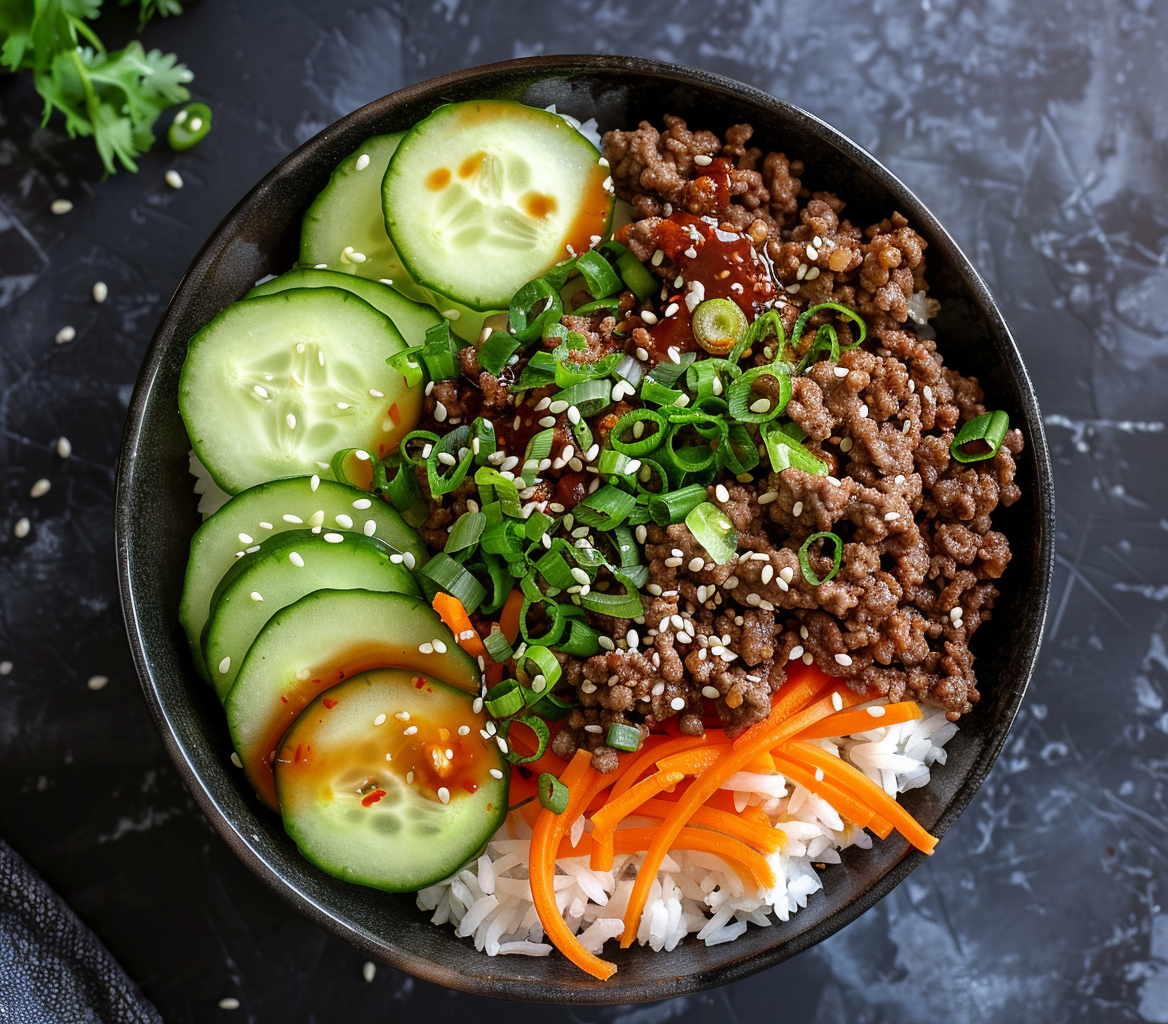

Craving the bold, sweet-savory flavors of Korean BBQ but don’t have time for a complicated recipe? Korean ground beef bowls are your answer. This quick and easy dinner comes together in just 15 minutes using simple pantry staples, yet delivers restaurant-quality flavor that rivals any takeout. With tender, caramelized ground beef coated in a sticky Asian-inspired sauce served over fluffy rice, these Korean beef bowls have become one of the most beloved weeknight dinner recipes for busy families everywhere.
What is a Korean Ground Beef Bowl?
A Korean ground beef bowl is a simplified, budget-friendly take on traditional Korean bulgogi. While authentic bulgogi uses thinly sliced marinated beef that’s grilled or stir-fried, this quick version swaps in ground beef for a meal that’s ready in a fraction of the time. The ground beef is seasoned with a savory-sweet sauce made from soy sauce, brown sugar, sesame oil, garlic, and ginger, then served over rice and topped with fresh vegetables and garnishes.
This dish captures all the essential flavors of Korean cuisine—umami from soy sauce, sweetness from brown sugar, nuttiness from sesame oil, and aromatic depth from garlic and ginger—without requiring specialty ingredients or hours of marinating. It’s the perfect introduction to Korean cooking for beginners while being satisfying enough for experienced home cooks.
Why You’ll Love This Korean Beef Bowl Recipe
Lightning Fast: From start to finish, dinner is on the table in 15-20 minutes, making this ideal for hectic weeknights.
Budget-Friendly: Ground beef and rice are among the most economical ingredients, yet this dish tastes anything but cheap.
Pantry Staples: Most ingredients are likely already in your kitchen—no special shopping trip required.
One Pan Meal: Everything cooks in a single skillet, meaning minimal cleanup when you’re done eating.
Incredibly Flavorful: The combination of sweet, savory, and slightly spicy flavors creates an addictive taste that keeps everyone coming back for seconds.
Customizable: Easily adapt with different toppings, vegetables, or spice levels to suit your family’s preferences.
Meal Prep Perfect: Makes excellent leftovers and can be prepped ahead for easy grab-and-go lunches.
Kid-Approved: The sweet-savory flavor profile appeals to picky eaters while introducing them to new cuisines.
Essential Ingredients
For the Korean Ground Beef:
- 1-1.5 lbs ground beef (85-93% lean works well)
- 3-4 cloves garlic, minced
- 1 tablespoon fresh ginger, grated or minced
- 1/3 cup brown sugar
- 1/4-1/3 cup soy sauce (reduced sodium recommended)
- 2 tablespoons sesame oil
- 1/4 teaspoon red pepper flakes (adjust to taste)
- 1/4 teaspoon black pepper
- 1 tablespoon rice vinegar (optional but recommended)
- 1 teaspoon cornstarch mixed with 1 tablespoon water (for thickening)
For Serving:
- 3-4 cups cooked white rice, brown rice, or cauliflower rice
- 3-4 green onions, sliced
- 1-2 tablespoons sesame seeds
- Optional vegetables: shredded carrots, sliced cucumbers, edamame, broccoli, bell peppers
Optional Toppings:
- Fried egg or soft-boiled egg
- Kimchi
- Sriracha or gochujang sauce
- Spicy mayo (mayo mixed with sriracha)
- Pickled vegetables
- Fresh cilantro
- Nori strips
Step-by-Step Instructions
Making the Korean Beef
Step 1: Prepare the Sauce In a small bowl, whisk together the brown sugar, soy sauce, sesame oil, rice vinegar, red pepper flakes, and black pepper until the sugar dissolves. Having your sauce ready before cooking ensures everything comes together quickly. Set aside.
Step 2: Brown the Ground Beef Heat a large skillet or wok over medium-high heat. Add the ground beef and cook for 4-6 minutes, breaking it into small crumbles with a wooden spoon or spatula as it browns. Cook until no pink remains and the beef develops nice caramelized bits. The browning adds depth of flavor to the finished dish.
Step 3: Drain Excess Fat Once the beef is fully cooked, drain any excess fat from the pan. Even lean ground beef releases some fat during cooking, and removing it prevents the sauce from becoming greasy. You can use a spoon to remove the fat or carefully pour it into a heat-safe container.
Step 4: Add Aromatics Return the skillet to medium heat. Add the minced garlic and grated ginger to the beef, stirring constantly for about 30-60 seconds until fragrant. Be careful not to let the garlic burn, as it can turn bitter. The aromatics should become fragrant almost immediately.
Step 5: Create the Glaze Pour the prepared sauce over the beef and stir to coat everything evenly. Let the mixture simmer for 2-3 minutes, stirring occasionally. The sauce will begin to reduce and thicken, coating the beef in a glossy glaze. If you want a thicker sauce, stir in the cornstarch slurry during this step and cook for an additional minute.
Step 6: Final Touches Stir in half of the sliced green onions, reserving the rest for garnish. Remove from heat—the residual heat will continue to thicken the sauce slightly.
Assembling Your Bowl
Step 7: Build Your Bowl Start with a generous portion of cooked rice as your base. Top with the Korean ground beef, making sure to get plenty of that delicious sauce. Add your choice of fresh or cooked vegetables around the bowl.
Step 8: Garnish and Serve Sprinkle with remaining green onions and sesame seeds. Add any optional toppings like a fried egg, kimchi, or a drizzle of spicy mayo. Serve immediately while the beef is hot and the sauce is at its most flavorful.
Pro Tips for Perfect Korean Beef Bowls
1. Use Fresh Garlic and Ginger While powdered versions work in a pinch, fresh garlic and ginger provide much brighter, more authentic flavor. The difference is truly noticeable in this simple recipe where each ingredient shines.
2. Don’t Overcrowd the Pan If doubling the recipe, cook the beef in two batches. Overcrowding prevents proper browning and can result in steamed, gray meat instead of caramelized, flavorful beef.
3. Adjust Sweetness to Taste Start with the lower amount of brown sugar and add more if needed. Different brands of soy sauce vary in saltiness, which affects how sweet the dish should be for balance.
4. Use Reduced Sodium Soy Sauce Regular soy sauce can make this dish overly salty. Reduced sodium gives you better control over the final flavor and is healthier overall.
5. Let the Sauce Reduce Don’t rush the simmering step. Allowing the sauce to reduce concentrates the flavors and creates that characteristic glossy coating on the beef.
6. Prep Your Toppings in Advance While the beef cooks, slice your vegetables, cook your egg, and prepare garnishes. Everything comes together quickly, so having toppings ready means you can serve immediately.
7. Save Some Green Onions for Garnish The fresh green onions added at the end provide a bright, sharp contrast to the rich, sweet beef. Don’t skip this step—it makes a difference.
8. Taste and Adjust Before serving, taste the beef and adjust seasoning if needed. You might want more red pepper flakes for heat, a splash more soy sauce for saltiness, or additional brown sugar for sweetness.
Delicious Variations
Protein Alternatives
- Ground Turkey: Lean ground turkey works beautifully and cuts calories while maintaining flavor
- Ground Chicken: Light and mild, perfect for those who prefer poultry
- Ground Pork: Adds richness and a slightly sweeter flavor profile
- Plant-Based: Use plant-based ground meat for a vegetarian version
- Tofu Crumbles: Press and crumble extra-firm tofu for a vegetarian option that soaks up the sauce beautifully
Spice Levels
- Mild: Omit red pepper flakes entirely for kid-friendly bowls
- Medium: Use 1/4 teaspoon red pepper flakes as written
- Spicy: Add 1-2 teaspoons gochujang (Korean chili paste) or increase red pepper flakes to 1/2 teaspoon
- Extra Hot: Serve with sriracha, fresh sliced jalapeños, or Korean chili oil
Vegetable Add-Ins
- Broccoli: Steam or stir-fry florets and add to the bowl
- Bell Peppers: Dice and cook with the beef for added color and crunch
- Carrots: Julienne or shred for a sweet, crunchy element
- Snap Peas: Quick-sauté for crisp-tender texture
- Mushrooms: Slice and cook for earthy umami flavor
- Baby Bok Choy: Wilted in the pan for authentic Korean flavor
- Zucchini: Spiralized or diced for extra vegetables
Grain Alternatives
- Brown Rice: Nuttier flavor and more fiber than white rice
- Cauliflower Rice: Low-carb option that still soaks up the sauce
- Quinoa: Protein-packed and gluten-free
- Rice Noodles: For a noodle bowl variation
- Lettuce Wraps: Skip grains entirely and wrap the beef in crisp lettuce leaves
Fusion Twists
- Korean Taco Bowl: Serve with tortilla chips, guacamole, and pico de gallo
- Korean Burrito Bowl: Add black beans, corn, and Mexican cheese
- Korean Fried Rice: Mix the beef directly into fried rice for a complete one-pan meal
- Korean Bibimbap Style: Arrange multiple vegetables in sections around the bowl with the beef in the center
Make-Ahead and Meal Prep Instructions
Korean ground beef bowls are exceptional for meal prep, making them perfect for busy weeks when you want healthy homemade lunches or quick dinners.
Advance Preparation
Sauce Prep: Mix the sauce ingredients up to 3 days ahead and store in the refrigerator. Shake or whisk before using.
Vegetable Prep: Wash, chop, and store vegetables in airtight containers for up to 5 days. Keep them separate until ready to assemble.
Rice Cooking: Cook a large batch of rice and portion it into meal prep containers. Rice keeps refrigerated for 5 days or frozen for up to 3 months.
Meal Prep Assembly
Cook a double or triple batch of the Korean ground beef. Let it cool completely, then portion into individual containers with rice and your choice of vegetables. Store in the refrigerator for up to 4 days. Add fresh toppings like green onions and sesame seeds just before eating for the best texture and flavor.
Storage Guidelines
Refrigeration: Store cooked Korean beef in an airtight container for up to 4 days. Store rice separately for best texture, as it can absorb moisture from the beef.
Freezing: The cooked beef freezes beautifully for up to 3 months. Portion into freezer-safe containers or bags, removing as much air as possible. Thaw overnight in the refrigerator before reheating.
Reheating: Reheat the beef in a skillet over medium heat with a splash of water or broth to restore moisture. Microwave individual portions for 1-2 minutes, stirring halfway through. Rice can be reheated in the microwave with a damp paper towel over it to prevent drying out.
Serving Suggestions and Side Dishes
While Korean beef bowls are a complete meal on their own, these sides complement them beautifully:
Traditional Korean Sides (Banchan):
- Kimchi: The quintessential Korean side dish adds tangy, spicy, fermented flavor
- Korean Cucumber Salad: Quick-pickled cucumbers provide refreshing crunch
- Korean Spinach (Sigeumchi Namul): Blanched spinach with sesame oil and garlic
- Seasoned Bean Sprouts: Light, crispy, and full of texture
- Pickled Radish (Danmuji): Sweet and tangy yellow pickled daikon
Easy Vegetable Sides:
- Steamed Edamame: Simple, healthy, and always popular
- Asian Slaw: Cabbage with rice vinegar dressing and sesame seeds
- Roasted Broccoli: With garlic and a drizzle of sesame oil
- Stir-Fried Green Beans: Quick-cooked with garlic
- Seaweed Salad: Adds authentic Korean flavor and texture
Soup Options:
- Miso Soup: Light and complementary to the rich beef
- Egg Drop Soup: Comforting and easy to make
- Hot and Sour Soup: Adds tangy, spicy notes
Appetizers:
- Spring Rolls: Fresh or fried, with peanut or soy dipping sauce
- Dumplings: Pan-fried or steamed gyoza or mandu
- Korean Scallion Pancakes (Pajeon): Crispy and savory
Frequently Asked Questions
Can I make this gluten-free? Yes! Simply substitute tamari or a gluten-free soy sauce for regular soy sauce. Check that all other ingredients are certified gluten-free, particularly the sesame oil and any gochujang if using.
How can I make this less sweet? Reduce the brown sugar to 2-3 tablespoons instead of 1/3 cup. You can always add more, but you can’t take it away. Start conservative and adjust to your taste.
What’s the best type of ground beef to use? 85-90% lean ground beef provides the best balance of flavor and health. Leaner options work but may be slightly drier; fattier beef requires more draining but has richer flavor.
Can I use ground beef that’s already been cooked and frozen? Yes, though the texture won’t be quite as good as freshly cooked beef. Thaw completely, add to the pan with the garlic and ginger, then proceed with adding the sauce.
How do I prevent the garlic from burning? Cook over medium heat (not high) and stir constantly once the garlic is added. Have your sauce ready to pour in quickly—the liquid will stop the garlic from overcooking.
What can I substitute for sesame oil? While sesame oil provides authentic nutty flavor, you can substitute with olive oil or vegetable oil in a pinch. The flavor won’t be quite as traditional, but the dish will still be delicious.
Is this recipe spicy? As written with 1/4 teaspoon red pepper flakes, it has mild warmth rather than significant heat. Omit the flakes entirely for zero spice, or increase them for more kick.
Can I double or triple this recipe? Absolutely! The sauce scales perfectly. Just cook the beef in batches to ensure proper browning rather than steaming.
Nutritional Information
One serving of Korean ground beef bowl (with 1 cup rice) contains approximately:
- Calories: 450-550
- Protein: 28-35g
- Carbohydrates: 45-55g
- Fat: 15-20g
- Fiber: 2-3g
- Sugar: 12-15g
This dish provides excellent protein from the beef, complex carbohydrates from rice, and healthy fats from sesame oil. To lighten it, use lean ground beef, reduce sugar, serve with cauliflower rice, or increase the vegetable portion.
The Appeal of Korean Beef Bowls
Korean ground beef bowls represent everything we love about modern home cooking: they’re quick enough for busy weeknights, use affordable ingredients most people already have, deliver bold restaurant-quality flavors, and can be customized endlessly to suit different tastes and dietary needs.
The recipe is forgiving and nearly impossible to mess up, making it perfect for new cooks while being satisfying enough for experienced home chefs. The sweet-savory sauce creates an addictive flavor profile that appeals to both adults and children, solving the eternal “what should we have for dinner” dilemma.
Beyond practicality, these bowls offer a gateway into Korean cuisine. They introduce fundamental Korean flavors—soy, sesame, ginger, garlic—in an accessible format that doesn’t require specialty ingredients or techniques. Once you master this basic recipe, you’ll find yourself branching out to explore more authentic Korean dishes.
Why This Recipe Works
The magic of Korean beef bowls lies in the perfect balance of flavors and textures. The brown sugar caramelizes as the beef cooks, creating depth and slight char on the meat. Soy sauce provides savory umami, while sesame oil adds nutty richness. Fresh ginger and garlic bring aromatic brightness that cuts through the sweetness.
The ground beef format is genius—it browns quickly, absorbs the sauce thoroughly, and distributes evenly over rice. Unlike sliced beef, every bite delivers consistent flavor. The texture contrast between tender beef, fluffy rice, crunchy vegetables, and crispy sesame seeds creates a satisfying eating experience.
Most importantly, the sauce reduces and concentrates during cooking, coating each morsel of beef in a sticky, flavorful glaze that clings to the rice below. This ensures every forkful is packed with taste, not just the meat itself.
Final Thoughts
Korean ground beef bowls prove that weeknight dinners don’t have to be boring, complicated, or expensive to be absolutely delicious. In less time than it takes to order and pick up takeout, you can create a homemade meal that’s healthier, more affordable, and just as flavorful.
This recipe has earned its place as a favorite for good reason—it delivers on every front. The bold flavors satisfy cravings for something exciting and different, the quick prep time respects your busy schedule, and the simple ingredient list means it’s accessible any night of the week.
Whether you’re cooking for picky kids, meal prepping for the week ahead, or just want something different from the usual dinner rotation, Korean beef bowls are your answer. Make this recipe once, and it’ll become a permanent fixture in your weeknight dinner repertoire. Your family will thank you, and you’ll wonder how you ever lived without this easy, delicious recipe.
Prep Time: 5 minutes
Cook Time: 10 minutes
Total Time: 15 minutes
Servings: 4
Difficulty: Easy
Related posts:
 Hobo Casserole Ground Beef Recipe: Easy One-Dish Comfort Food
 Air Fryer Chicken Bites And Broccoli: The Perfect 20-Minute Weeknight Dinner
 Korean BBQ Meatballs With Spicy Mayo Dip: An Incredible 7-Step Recipe
 Gordon Ramsay Beef Stroganoff Recipe: Master Chef’s Ultimate Guide
 Cheesy Garlic Chicken Wraps: A 30-Minute Meal That Will Transform Your Weeknight Dinner Routine
 Beef Pasta In Tomato Sauce: The Ultimate Comfort Food Recipe