
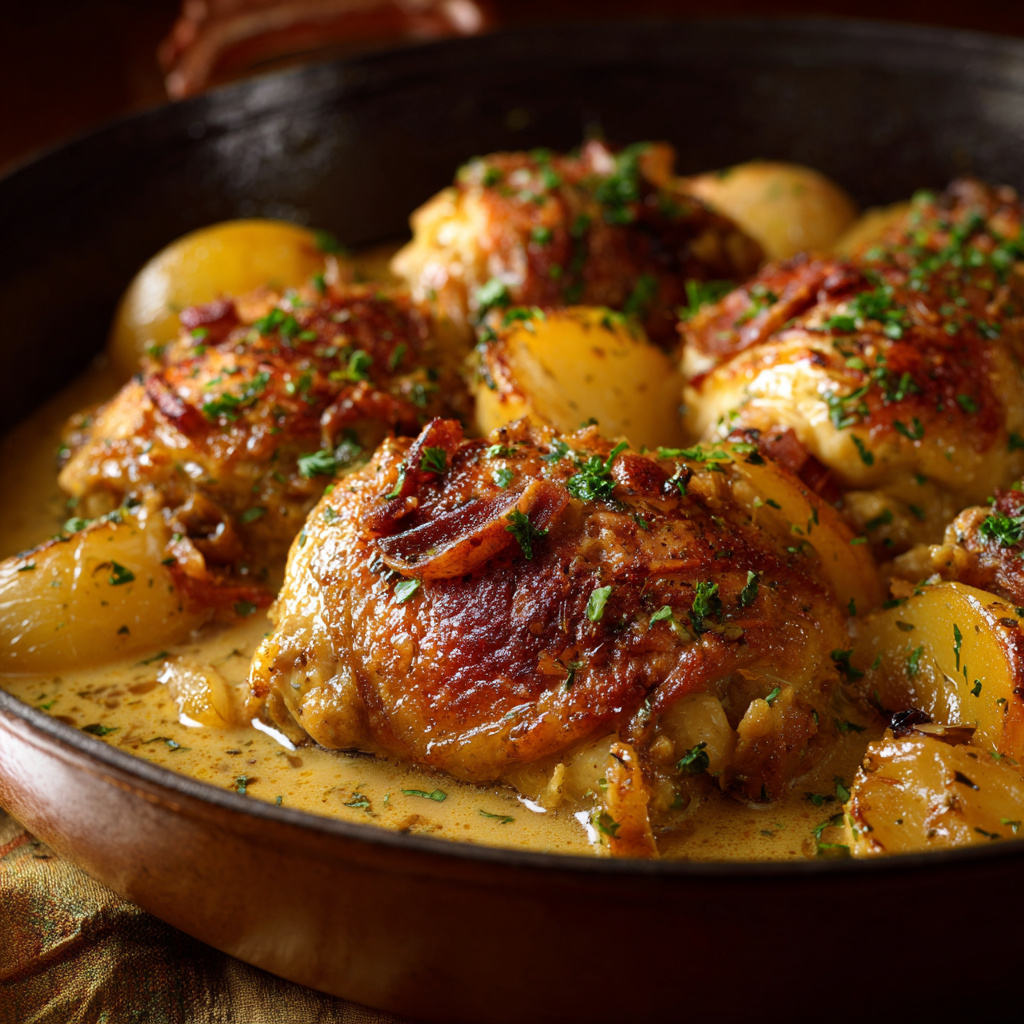

Transport your kitchen to the French countryside with this stunning French Apple Cider Chicken recipe, also known as Poulet à la Normande or Chicken Normandy. This elegant yet comforting one-pot dish features tender chicken braised in apple cider, finished with cream, and topped with caramelized apples. Perfect for fall entertaining or cozy family dinners, this classic French recipe delivers restaurant-quality results with surprisingly simple techniques.
What is French Apple Cider Chicken?
French Apple Cider Chicken, traditionally called Poulet à la Normande, is a classic French casserole dish from the Normandy region of northwestern France. The recipe features chicken that’s browned and slowly braised in apple cider sauce, then finished with caramelized apple wedges and cream. The dish celebrates Normandy’s famous culinary traditions, showcasing the region’s renowned apples, butter, cream, and hard cider.
This beloved French comfort food combines savory and sweet elements in perfect harmony—tender chicken, smoky bacon, earthy herbs, sweet apples, and a rich creamy sauce infused with the complex flavors of dry hard cider. It’s the kind of meal that makes you want to slow down and savor every bite while pretending you’re dining at a countryside bistro in France.
The Story Behind Chicken Normandy
Normandy is a picturesque coastal region in northwestern France, famous for its rolling green hills, apple orchards, dairy farms, and charming villages. The region is world-renowned for its cheeses, calvados (apple brandy), cider, seafood, cream, and butter. These local ingredients form the foundation of Norman cuisine, and Poulet à la Normande perfectly showcases the best the region has to offer.
Normandy cider is made from fermented apple juice, typically ranging from 2% to 5% alcohol, and comes in brut (dry), doux (sweet), or demi-sec (semi-dry) varieties. It’s lightly sparkling but rich and intense with fruity notes. When combined with chicken, the cider creates a flavorful braising liquid that tenderizes the meat while infusing it with distinctive apple and subtle fermented notes.
This traditional recipe has been passed down through generations of French home cooks and remains a beloved comfort food throughout France, especially during autumn when apples are at their peak.
Why You’ll Love This Recipe
Restaurant-Quality at Home: This elegant dish looks and tastes like something from a French bistro but is surprisingly straightforward to make in your own kitchen.
Perfect Fall Comfort Food: The combination of apples, cider, cream, and herbs creates the ultimate cozy autumn meal that warms you from the inside out.
One-Pot Wonder: Everything cooks in a single Dutch oven or large skillet, making cleanup easy and allowing flavors to meld beautifully.
Impressive for Entertaining: This dish has serious wow-factor for dinner parties while requiring minimal active cooking time once it’s in the oven.
Tender, Flavorful Chicken: The slow braising method produces incredibly tender, fall-off-the-bone chicken that’s infused with the complex flavors of cider, herbs, and bacon.
Flexible and Forgiving: The recipe adapts well to different chicken cuts, can be made ahead, and reheats beautifully for leftovers.
Balanced Flavors: The sweet apples, savory bacon, tangy cider, rich cream, and aromatic herbs create a perfectly balanced dish that appeals to diverse palates.
Essential Ingredients
The Chicken Foundation
Chicken (2-3 pounds) For full flavor, use whole chicken legs or thighs on the bone with skin. Bone-in, skin-on chicken is essential for this recipe—the bones add flavor to the braising liquid while the skin becomes beautifully golden and crispy. You can use whole chicken legs, separated thighs and drumsticks, or just thighs if you prefer. Boneless chicken breasts work in a pinch but will be less flavorful and require shorter cooking time.
The Braising Liquid
Dry Hard Apple Cider (2 cups) The star ingredient that gives this dish its distinctive character. Use dry hard cider, not sweet. Look for craft ciders with good flavor—what you put in is what you get out. French Normandy cider is ideal, but any quality dry hard cider works beautifully. If you can’t find hard cider or prefer alcohol-free, use regular apple cider or cloudy apple juice, though the flavor will be slightly different.
Chicken Stock (1 cup) Adds savory depth to the braising liquid and helps create a richer sauce. Homemade or quality store-bought stock both work well.
Calvados or Brandy (1/4 cup, optional but recommended) Calvados is an apple brandy from Normandy that adds sophisticated depth and aromatic complexity. Regular brandy or cognac works as an excellent substitute. This ingredient is optional but highly recommended for authentic flavor.
The Aromatic Base
Bacon (4-6 slices, thick-cut) A small amount of bacon can impart incredible flavor. The bacon adds smoky, salty richness that balances the sweetness of the apples and cider. Cook until crispy, then remove before browning the chicken.
Shallots or Onions (2-3 medium) Being classically French, shallots are always better here but use onions if you can’t find them. Shallots have a more delicate, sweet flavor that’s traditional in French cooking, but yellow onions work perfectly fine as a substitute.
Celery (2 stalks, chopped) Adds aromatic depth and subtle earthiness to the sauce. Part of the classic French mirepoix vegetable base.
Garlic (3-4 cloves, minced) Essential for adding savory depth and aromatic complexity to the sauce.
The Apples
Sweet Apples (2-3 medium) Use a sweet variety of apples, like Pink Lady, Jonagold, Golden Delicious, or Boskoop. Choose apples that hold their shape when cooked rather than varieties that turn mushy. Granny Smith can be used for a tarter flavor, but sweeter apples create better balance with the savory elements.
The Finishing Touches
Heavy Cream or Crème Fraîche (1 cup) Thick Dalewood Fromage Crème Fraîche is perfect for this dish. The extra creaminess and slight hit of acid offsets the sweetness of the apples. Heavy cream works beautifully as a substitute. Light cream can be used for a lighter version, though the sauce won’t be quite as rich.
Fresh Herbs Thyme and bay are the herbs of choice. Fresh thyme is essential for its earthy, slightly lemony flavor. Bay leaves add subtle depth. Fresh parsley makes a lovely garnish.
Flour (2 tablespoons) Used to thicken the sauce and create a velvety texture. The flour is cooked with the vegetables before adding liquid to eliminate any raw flour taste.
Butter (2-3 tablespoons) For caramelizing the apples and adding richness. Use good-quality unsalted butter.
Olive Oil For browning the chicken to create a golden, crispy skin.
Salt and White Pepper Season the chicken well with salt and white pepper. White pepper is traditional in French cooking for light-colored sauces, but black pepper works fine if that’s what you have.
Step-by-Step Instructions
Preparation (15 minutes)
Step 1: Prep Your Ingredients Pat the chicken pieces dry with paper towels—this is crucial for achieving golden, crispy skin. Season generously with salt and pepper on all sides. Chop the bacon, dice the shallots and celery, mince the garlic, and peel and quarter the apples, removing seeds.
Step 2: Preheat the Oven Heat oven to 350°F. Having the oven ready ensures smooth transition from stovetop to oven cooking.
Building the Flavors (20 minutes)
Step 3: Brown the Chicken Heat a large, lidded casserole dish or non-stick frying pan and add a good splash of olive oil. Brown the chicken in the pan, skin side down, until golden on both sides, about 8-10 minutes. Don’t crowd the pan—work in batches if necessary. The goal is deep golden-brown skin, not pale. Remove chicken and set aside.
Step 4: Cook the Bacon In the same pan, add the bacon and cook until the fat has started to render but it is not brown, about 3 minutes. You want the bacon cooked but not crispy at this stage, as it will continue cooking with the chicken. Remove and set aside with the chicken.
Step 5: Sauté the Vegetables Add the chopped onions and celery and sauté until translucent, about 3-5 minutes. Add the garlic and cook briefly for about 30 seconds, stirring constantly to ensure it doesn’t burn. The fond (browned bits) from the chicken and bacon will flavor the vegetables.
Step 6: Add Flour and Deglaze Sprinkle over the flour and cook for a minute until absorbed. Add the brandy if using and stir briefly. The brandy will bubble up and cook off the alcohol while loosening all those flavorful browned bits stuck to the bottom of the pan.
Step 7: Add Liquids and Herbs Then add the cider and bring to a rapid bubble. Add the stock, thyme, and bay leaves and cook for a few minutes until reduced by about a third. This reduction concentrates the flavors and creates a more intense sauce base.
Braising the Chicken (45-60 minutes)
Step 8: Return Chicken to Pan Add the chicken (skin side up) back to the skillet. Arrange the pieces so they’re mostly submerged in the liquid but the skin remains above the surface to stay crispy. Nestle the bacon pieces around the chicken.
Step 9: Braise in the Oven Cover and bake 30 minutes, then uncovered 30 minutes. The covered portion steams the chicken and keeps it moist, while the uncovered portion allows the skin to crisp up and the sauce to reduce. Bake the chicken for 30 minutes total, or until the internal temperature reaches 165°F and the chicken is tender and nearly falling off the bone.
Finishing the Dish (15 minutes)
Step 10: Caramelize the Apples While the chicken is finishing off in the oven, heat a non-stick pan and melt the butter. Gently fry the apple slices until golden on each side. Watch apples carefully as they burn quickly. The apples should be tender but still hold their shape, with beautiful golden caramelized edges.
Step 11: Add Cream Add cream, cook 20 more minutes. Carefully remove the casserole from the oven. If desired, transfer the chicken to a plate temporarily. Stir the cream into the sauce and let it simmer on the stovetop for a few minutes until it thickens to your desired consistency.
Step 12: Final Assembly Stir in apples. Return the chicken to the pan if you removed it. Gently fold in the caramelized apple wedges, being careful not to break them apart. Serve the casserole with the caramelized apple slices scattered on top with chopped parsley (optional).
Pro Tips for Perfect Results
Achieving Perfect Chicken
Don’t Skip the Browning: That deep golden color isn’t just for looks—it’s essential for flavor. The caramelization that occurs during browning creates complex, savory notes through the Maillard reaction.
Keep Skin Dry: Pat chicken completely dry before seasoning and browning. Moisture is the enemy of crispy skin. Some cooks even refrigerate uncovered chicken for a few hours to dry out the skin further.
Room Temperature Matters: Always let the chicken come to room temperature before cooking—it makes such a difference in browning. Cold chicken from the fridge won’t brown properly and will cook unevenly.
Use a Meat Thermometer: The most reliable way to know when chicken is done is checking internal temperature. Aim for 165°F in the thickest part of the thigh.
Mastering the Sauce
Build Layers of Flavor: Take your time with the vegetables—those caramelized bits are flavor gold. Don’t skip seasoning at every step—it builds layers of taste that make this dish extraordinary.
Reduce Properly: If your sauce seems thin after braising, don’t add flour or cornstarch. Remove the chicken and reduce the liquid over medium heat. The natural pectin from the apples helps create that silky texture.
Deglaze Thoroughly: When adding the brandy and cider, scrape up every bit of fond from the bottom of the pan. These browned bits are packed with flavor.
Cream Timing: Adding cream at the end prevents it from breaking or curdling during the long braising time.
Apple Perfection
Choose the Right Apples: Firm, sweet apples that hold their shape are essential. Many people have noted that even using Goldens, apples can cook up into the sauce, so watching cooking time is important.
Separate Cooking: Cooking the apples separately in butter ensures they caramelize beautifully and maintain their shape rather than disintegrating into the sauce.
Don’t Overcook: The apples should be tender but still hold their structure. They’ll continue cooking slightly when added to the hot sauce.
Serving Suggestions
Traditional French Accompaniments
Crusty French Bread or Baguette Essential for soaking up every drop of that incredible creamy cider sauce. Serve warm for the best experience.
Mashed Potatoes Mashed potatoes with brown butter or Boulangere Potatoes would be my choice. The creamy potatoes are perfect vehicles for the rich sauce.
Buttered Egg Noodles Wide egg noodles tossed in butter make an excellent base for the chicken and sauce.
Vegetable Sides
Vegetable side dishes that go really well alongside this creamy French chicken casserole are Italian green beans, roasted Brussels sprouts and butternut, oven-roasted fennel, or mashed sweet potatoes.
Simple Green Salad A crisp salad with Dijon vinaigrette provides refreshing contrast to the rich main dish.
Roasted Root Vegetables Carrots, parsnips, and turnips roasted until caramelized complement the autumn flavors.
Wine Pairing
White Wine Options: A full-bodied Chardonnay or Chenin Blanc from France pairs beautifully with the cream sauce and stands up to the rich flavors.
Red Wine Options: A light Pinot Noir or Beaujolais won’t overpower the delicate apple and cider flavors.
Traditional Pairing: Serve with the same dry hard cider you used for cooking for an authentic Norman experience.
Creative Variations
Lighter Version
Skip the cream and reduce the cider sauce until it thickens naturally. The dish will be less rich but still deeply flavorful. You can also use half cream and half Greek yogurt stirred in at the end.
Normandy Pork Chops
Pork chops cooked in cider and apples use the exact same technique but with thick bone-in pork chops instead of chicken for a different take on the classic.
Mushroom Addition
Sauté sliced mushrooms (cremini or shiitake) with the vegetables for extra earthiness and umami flavor.
Root Vegetable Version
Add chunks of carrots, parsnips, or potatoes to the braising liquid for a more complete one-pot meal.
Herb Variations
Try fresh tarragon instead of thyme for a more anise-forward flavor that’s classic in French cuisine. Sage also works beautifully with apples.
Non-Alcoholic Version
You can use alcohol-free apple cider and omit the brandy altogether. Use regular apple cider or cloudy apple juice as a substitute. The dish will be slightly sweeter but still delicious.
Storage and Make-Ahead
Refrigerator Storage
Store leftover chicken and sauce in an airtight container in the refrigerator for up to 3-4 days. The flavors actually improve overnight as they meld together, making this an excellent make-ahead option.
Reheating Instructions
Reheat gently in a covered Dutch oven at 325°F for 20-25 minutes until warmed through, or reheat individual portions in the microwave. Add a splash of chicken stock if the sauce has thickened too much.
Freezing
Leftovers can be stored in the fridge or freezer. Freeze the chicken and sauce (without the caramelized apples) for up to 3 months. Thaw overnight in the refrigerator before reheating. Make fresh caramelized apples when serving.
Make-Ahead Strategy
This casserole is ideal for entertaining because it’s largely hands-off once it’s in the oven. You can brown the chicken and prepare the sauce base up to a day ahead, then refrigerate. When ready to serve, bring to room temperature and proceed with braising in the oven. The caramelized apples are best made fresh just before serving.
Common Questions
Can I use chicken breasts instead of thighs? You can but this recipe tastes better with chicken thighs. Chicken breasts tend to dry out faster, so reduce the cooking time. Check for doneness after 20-25 minutes instead of the full braising time.
What type of cider should I use? Use dry hard cider (alcoholic apple cider), not sweet cider or apple cider vinegar. The main difference between hard cider and a regular one apart from alcohol is that the recipe calls for a dry hard cider, so using a regular one might make the dish too sweet.
Can I skip the cream? Yes, though the dish won’t be as rich and luxurious. You can certainly skip the cream if you stay away from dairy. The sauce will still be flavorful from the cider reduction.
What if I don’t have calvados or brandy? The brandy adds complexity but isn’t absolutely essential. You can skip the brandy. Simply add a bit more cider or chicken stock to compensate for the liquid.
How do I know when it’s done? The chicken should register 165°F internal temperature and be tender enough to easily pull from the bone. The sauce should be reduced and creamy, coating the back of a spoon.
Can I make this on the stovetop instead of the oven? This can be cooked in the oven, but it could just as easily bubble away on the stovetop. Simply keep it at a gentle simmer with the lid on for 35-45 minutes instead of transferring to the oven.
What makes this dish French versus just apple cider chicken? The traditional use of Normandy ingredients (hard cider, calvados, cream, butter) and cooking techniques (braising, finishing with cream) make this authentically French. The balance of flavors is also distinctly Norman.
Why This Recipe Works
French Apple Cider Chicken succeeds because it masterfully balances contrasting flavors and textures. The tender, savory chicken provides a hearty base while the sweet-tart apples and complex cider create brightness. The cream adds luxurious richness that ties everything together, while herbs and bacon contribute aromatic depth and smokiness.
The braising technique is key to the dish’s success. Slow cooking in liquid breaks down the collagen in the chicken, making it incredibly tender while infusing it with the flavors of cider, bacon, and aromatics. The two-stage cooking method—first covered, then uncovered—ensures moist meat with crispy skin.
The use of authentic Normandy ingredients creates flavors that transport you to the French countryside. This isn’t just chicken with apples—it’s a thoughtfully composed dish that showcases centuries of culinary tradition from one of France’s most beloved food regions.
The Normandy Connection
Understanding the ingredients’ origins helps appreciate why this dish works so beautifully. Normandy’s cool, maritime climate creates ideal conditions for apple cultivation, resulting in the region producing over 150 varieties of apples. These apples make exceptional cider with complex flavor profiles you won’t find in standard apple juice.
The region’s rich dairy tradition produces some of France’s finest butter and cream, which provide the luxurious base for Norman sauces. Combined with the area’s apple orchards, these ingredients define Norman cuisine—rich, refined, and focused on quality local products.
When you make Poulet à la Normande, you’re not just following a recipe—you’re participating in a culinary tradition that celebrates regional ingredients and time-honored techniques passed down through generations of French home cooks and chefs.
Final Thoughts
French Apple Cider Chicken (Poulet à la Normande) proves that the best recipes often come from regions with strong culinary identities and exceptional local ingredients. This classic Norman dish transforms simple chicken into something truly special through careful technique and thoughtful use of cider, cream, apples, and aromatics.
Whether you’re looking to impress dinner guests, expand your French cooking repertoire, or simply want a cozy autumn meal that makes your house smell incredible, this recipe delivers on all fronts. The combination of elegant presentation and comforting flavors makes it perfect for both special occasions and family dinners.
Make this French Apple Cider Chicken once, and it will become a treasured part of your fall cooking rotation. The tender chicken, rich creamy sauce, and caramelized apples create a memorable dining experience that brings a taste of the French countryside to your table. Serve it with crusty bread, a glass of wine, and good company for a meal that celebrates the best of French comfort food.
Related posts:
 Classic Homemade Apple Pie From Scratch
 Fall Apple Cider Beef Stew
 Cheesy French Onion Meatballs: The Ultimate Comfort Food Recipe
 Deep-Dish Pizza Pie Recipe: The Ultimate Chicago-Style Classic
 Beef Pasta In Tomato Sauce: A Classic Comfort Dish Perfected
 Authentic Chicken Tikka Masala Recipe: The Ultimate Guide To Making This Classic Dish At Home